What is central sensitization?
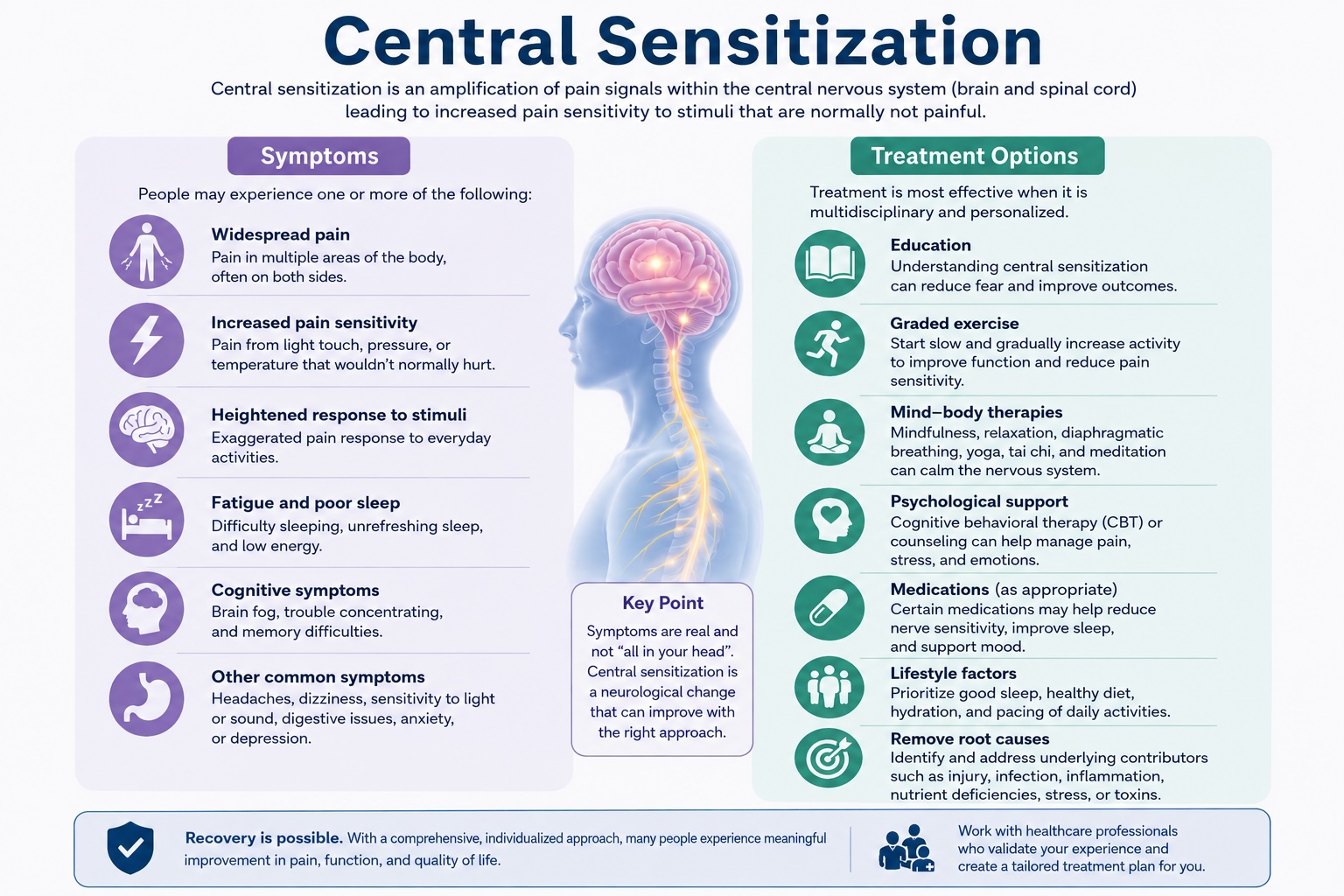
Central sensitization means that the nervous system becomes overly sensitive.
Pain signals are amplified, so the body feels more pain than expected.
This does not mean the pain is “in your head.”
It means your nervous system is working in an overprotective way.
Common symptoms
- Pain that feels out of proportion to findings
- Pain that spreads or changes location
- Increased sensitivity to touch or pressure
- Pain that persists even after treatment or surgery
- Fatigue, poor sleep, brain fog
Why does it happen?
Central sensitization often develops after:
- Surgery or injury
- Conditions like endometriosis or adenomyosis
- Long-term pain conditions
Over time, the brain and spinal cord become better at producing pain signals—even when the original problem improves.
How is it treated?
There is no single treatment. The goal is to calm the nervous system.
- Understanding your pain
Learning about central sensitization helps reduce fear and improves recovery.
- Treating underlying conditions
If conditions like endometriosis are present, they should still be treated appropriately.
- Physical therapy
Specialized physiotherapy (especially pelvic floor therapy) can help:
- Relax muscles
- Reduce pain sensitivity
- Improve movement
- Medications (in some cases)
These medications help calm the nervous system:
- Amitriptyline
- Duloxetine
- Gabapentin
They are used for pain modulation, not for depression.
- Psychological support
Techniques such as:
- Cognitive behavioral therapy (CBT)
- Here are two options for CBT
- Mín líðan – contact tanja@minlidan.is for an appointment
- Fjóla Helgadóttir – contact fjola@drfjola.com
- Here are two options for CBT
- Pain reprocessing therapy
help retrain how the brain processes pain.
- Gradual return to activity
Avoid complete rest. Instead:
- Increase activity slowly
- Stay consistent
- Avoid “overdoing it” on good days
- Sleep and stress management
Good sleep and stress reduction are essential for recovery.
What to avoid
- Long-term use of strong painkillers (opioids)
- Avoiding all activity due to fear of pain
Key message
Your pain is real, and it is treatable.
By working together, we can help your nervous system become less sensitive and improve your quality of life.