What Is Adenomyosis?
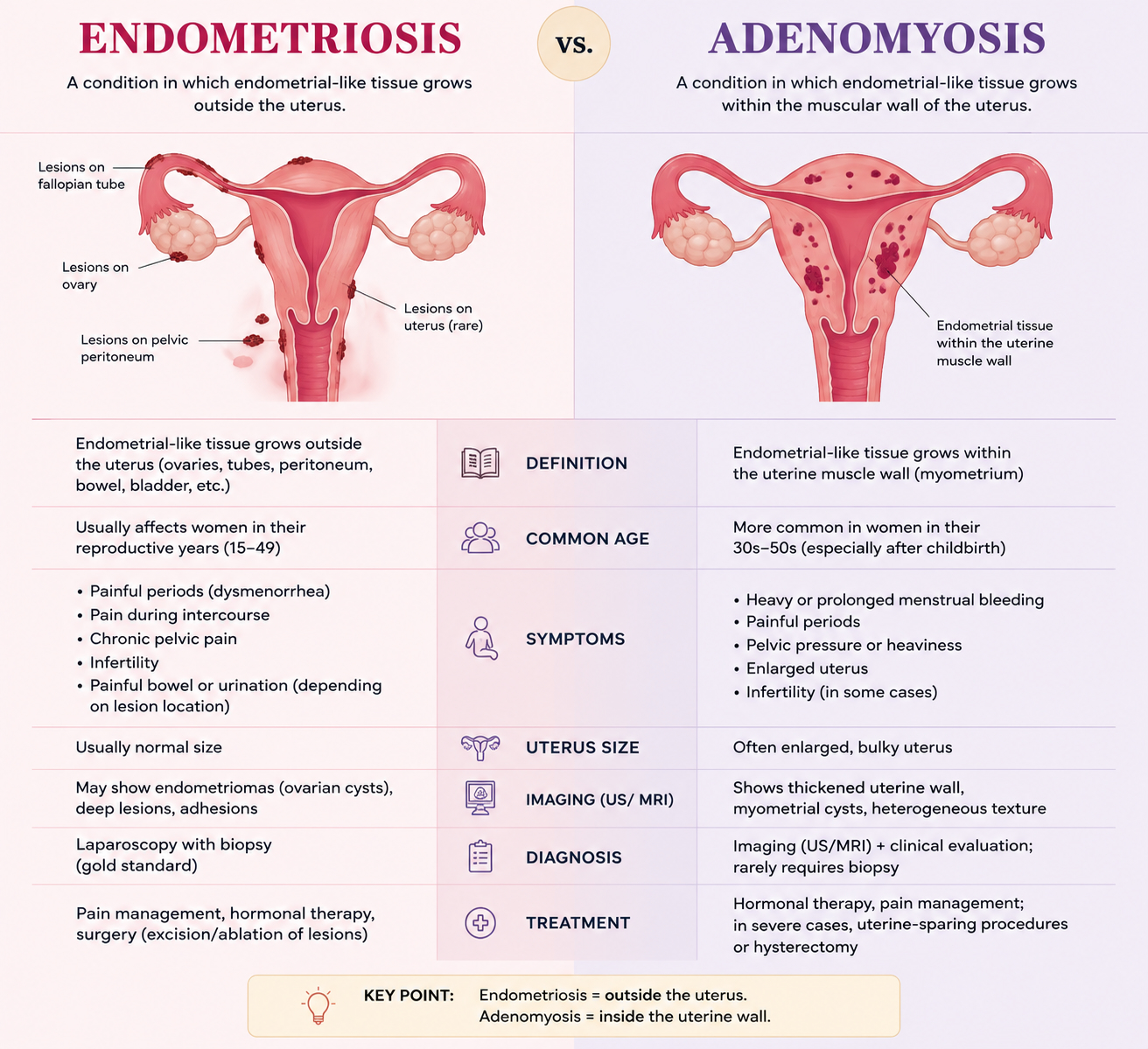
Adenomyosis is a common, non-cancerous condition of the uterus. Normally, the tissue that lines the inside of the uterus (called the endometrium) stays in place. In adenomyosis, this tissue grows into the muscular wall of the uterus (called the myometrium). This can cause the uterus to become enlarged, and may lead to pain, heavy bleeding, and other symptoms.
Adenomyosis is different from endometriosis, although the two conditions can occur together. In endometriosis, the tissue grows outside the uterus, while in adenomyosis, it grows into the uterine wall itself.
How Common Is Adenomyosis?
Adenomyosis is more common than many people realize. About 1 in 5 women seen in gynecology clinics may have adenomyosis when checked with ultrasound. It is most commonly diagnosed between the ages of 40 and 50, but younger women can also be affected — especially those being evaluated for difficulty getting pregnant. The incidence in teens and women in their 20’s has been increasing due to enhanced imaging techniques and adenomyosis may be quite prevalent in this age group too.
You may be at higher risk if you:
- Have had children (especially multiple pregnancies)
- Have had prior uterine procedures (such as a cesarean delivery or D)
- Have endometriosis
What Are the Symptoms?
Up to one-third of women with adenomyosis have no symptoms at all. For those who do, the most common symptoms include:
- Heavy menstrual bleeding — This is the most common symptom, affecting 40–60% of women with adenomyosis. Periods may become progressively heavier over time.
- Painful periods (dysmenorrhea) — Cramping and pelvic pain during your period that may worsen over the years.
- Chronic pelvic pain — A deep, aching pain in the pelvis that may occur outside of your period.
- Pain during intercourse (dyspareunia) — Some women experience discomfort during or after sexual activity.
- Difficulty getting pregnant (subfertility) — Adenomyosis may affect the ability to conceive or carry a pregnancy.
- An enlarged uterus — Your doctor may notice that your uterus feels larger or more tender than expected during a pelvic exam.
How Is Adenomyosis Diagnosed?
If your doctor suspects adenomyosis based on your symptoms and physical exam, the following tests may be used:
- Transvaginal ultrasound — This is usually the first imaging test. A small probe is placed in the vagina to create pictures of the uterus.
- MRI (magnetic resonance imaging) — This may be used if the ultrasound is not clear or to get a more detailed view.
In the past, adenomyosis could only be confirmed after a hysterectomy (removal of the uterus) by examining the tissue under a microscope. Today, improved imaging allows doctors to diagnose it without surgery.
What Are the Treatment Options?
There is no single “best” treatment for adenomyosis. Your doctor will work with you to choose a plan based on the severity of your symptoms, your age, and whether you want to become pregnant in the future.
Medications
- Pain relievers (NSAIDs) — Over-the-counter medications like ibuprofen can help manage mild pain and cramping.
- Hormonal IUD (levonorgestrel-releasing intrauterine system) — A small device placed in the uterus that releases a hormone called levonorgestrel. It can reduce heavy bleeding and pain and is one of the most commonly used treatments.
- Progestins — Hormonal medications (such as dienogest or norethindrone) taken by mouth that can help reduce pain and bleeding.
- Birth control pills — Combined oral contraceptives may help manage symptoms, especially in younger women.
- GnRH agonists or antagonists — These medications temporarily lower estrogen levels, which can shrink adenomyosis and reduce symptoms. They are usually used short-term because of side effects related to low estrogen (such as hot flashes and bone thinning).
- Tranexamic acid — A non-hormonal medication that can help reduce heavy menstrual bleeding.
Procedures and Surgery
- Uterine artery embolization (UAE) — A minimally invasive procedure that blocks blood flow to the adenomyosis, helping to shrink it and reduce symptoms.
- High-intensity focused ultrasound (HIFU) — A newer, non-invasive technique that uses focused sound waves to destroy adenomyotic tissue.
- Adenomyomectomy — A surgical procedure to remove the adenomyotic tissue while preserving the uterus. This may be an option for women who wish to become pregnant in the future.
- Hysterectomy (removal of the uterus) — This is the definitive treatment for adenomyosis and is typically considered when other treatments have not provided adequate relief and future pregnancy is not desired.
Living With Adenomyosis
Adenomyosis can significantly affect your quality of life, but there are effective treatments available. It is important to talk openly with your doctor about your symptoms, your goals (including whether you want to have children), and how the condition is affecting your daily life. Together, you can develop a treatment plan that is right for you.
After menopause, symptoms of adenomyosis typically improve because the condition depends on estrogen, which decreases naturally at that time.
When to See Your Doctor
Contact your healthcare provider if you experience:
- Periods that are getting progressively heavier
- Severe menstrual cramps that interfere with daily activities
- Pelvic pain that does not go away
- Difficulty getting pregnant
- Bleeding between periods