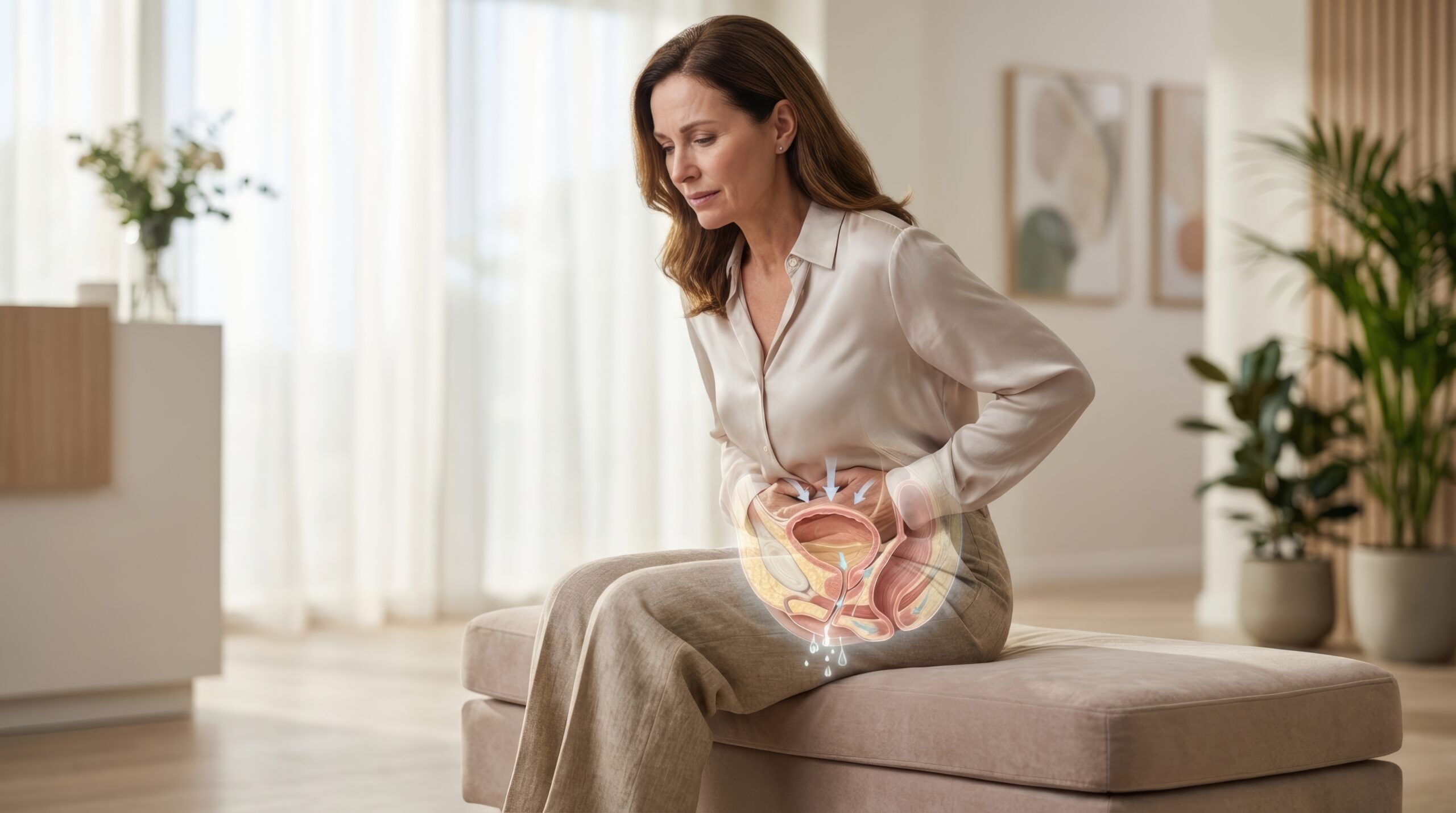
What Is the Pelvic Floor?
The pelvic floor is a group of muscles that sit at the bottom of your pelvis, like a hammock. These muscles support your bladder, uterus, and rectum. They help you control urination and bowel movements, and they play an important role in sexual function. Just like any other muscles in your body, pelvic floor muscles can become too tight, too weak, or both — and when they do, it can cause a wide range of symptoms.
What Is Pelvic Floor Dysfunction?
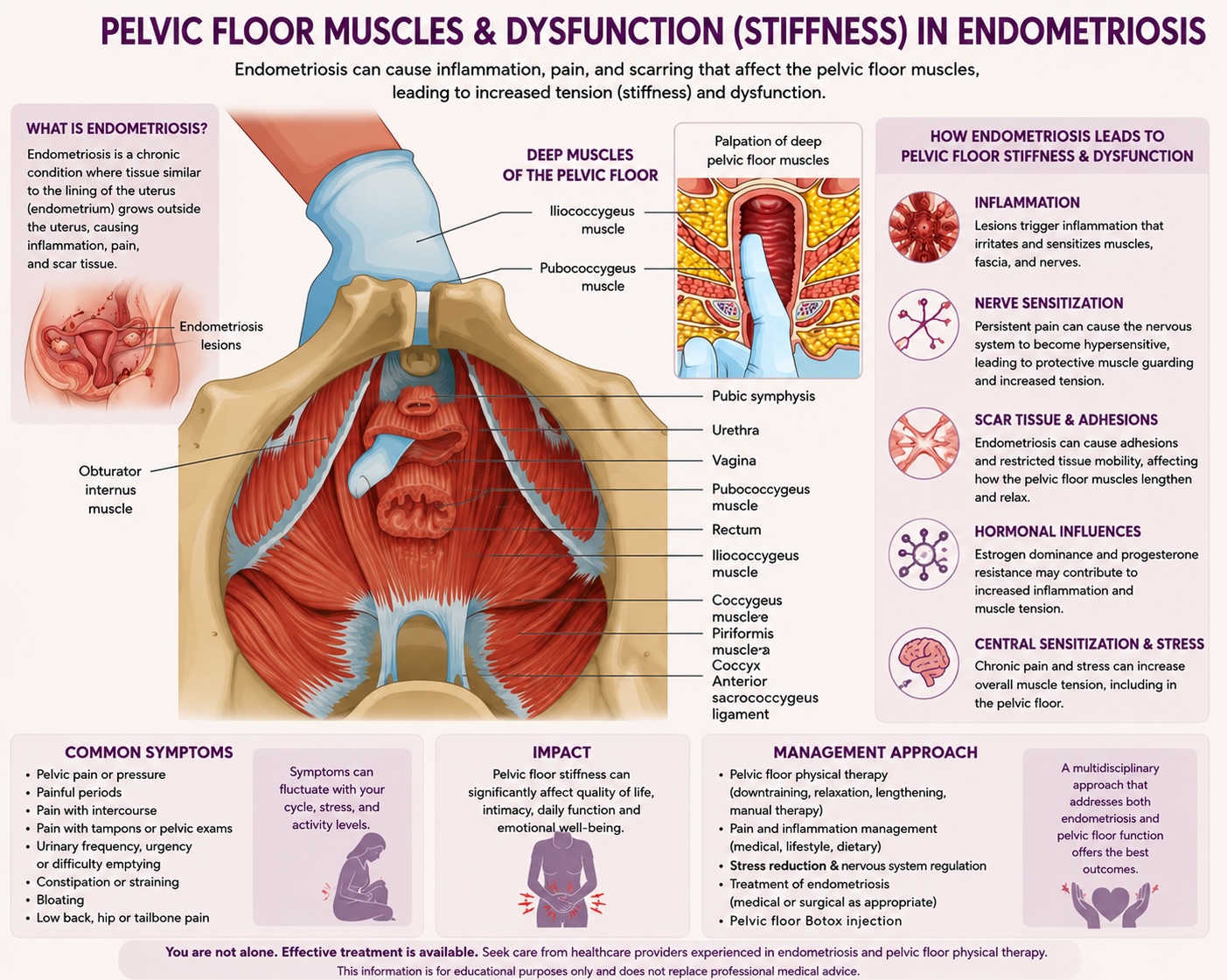
Pelvic floor dysfunction happens when the pelvic floor muscles do not work the way they should. One very common form of this is when the muscles become overly tight or stiff — a condition sometimes called “high-tone pelvic floor dysfunction” or “pelvic floor hypertonicity.” Instead of being able to tighten and relax normally, the muscles stay clenched or tense, much like a constant cramp. This ongoing muscle tension can cause significant pain and other problems.
How Does Endometriosis Relate to Pelvic Floor Stiffness?
Endometriosis is a condition where tissue similar to the lining of the uterus grows outside the uterus, causing inflammation and pain. Research shows that endometriosis and pelvic floor stiffness are closely connected:
- Chronic pain from endometriosis can cause the pelvic floor muscles to tighten as a protective “guarding” response — similar to how you might tense your shoulders when stressed.
- Over time, this guarding response can become a habit, and the muscles may stay tight even after endometriosis is treated.
- Studies have found that up to 75% of women with endometriosis have increased pelvic floor muscle tone, and nearly half have difficulty relaxing these muscles.
- The ongoing muscle tension can also sensitize the nerves in the pelvis, making pain signals stronger and more widespread — sometimes extending to the lower back, hips, and thighs.
This means that even after endometriosis surgery or hormonal treatment, pelvic pain may continue if the pelvic floor muscles remain stiff and tight. Addressing the muscle component is an important part of managing the pain.
Common Symptoms
Pelvic floor stiffness can cause a wide variety of symptoms. You may experience some or all of the following:
- Chronic pelvic pain — a deep ache, pressure, or heaviness in the pelvis that may be constant or come and go
- Pain during or after sexual intercourse (dyspareunia) — this is one of the most common symptoms
- Pain that worsens with physical activity, exercise, or prolonged sitting
- Pain that spreads to the lower back, hips, buttocks, or thighs
- Urinary problems — difficulty starting urination, a slow stream, feeling like you cannot fully empty your bladder, or urinary urgency and frequency
- Bowel problems — constipation, straining, feeling of incomplete emptying, or pain with bowel movements
- Pain during gynecologic exams
- A sensation of tightness, tension, or pressure in the vaginal area
Many people with these symptoms do not realize the source is muscular, because the pain can feel like it is coming from the bladder, bowel, or reproductive organs.
How Is It Diagnosed?
Pelvic floor stiffness is diagnosed through a physical examination. Your healthcare provider will gently press on the pelvic floor muscles (usually through a vaginal exam) to check for areas of tenderness, tightness, or trigger points — small knots in the muscle that can cause pain. They will also assess whether you can fully relax these muscles. This exam is the most reliable way to identify the problem.
Treatment Options
The good news is that pelvic floor stiffness is treatable. Treatment usually involves a combination of approaches tailored to your specific needs:
Pelvic Floor Physical Therapy
This is the cornerstone of treatment. A specially trained physical therapist will work with you to:
- Release tight muscles using hands-on techniques (manual therapy and myofascial release)
- Teach you how to relax and “let go” of your pelvic floor muscles (called “down-training”)
- Use biofeedback — a tool that shows you your muscle activity on a screen so you can learn to control it
- Guide you through stretches and exercises for the pelvic floor, hips, and surrounding muscles
- Teach diaphragmatic (belly) breathing, which helps relax the pelvic floor
Most patients attend sessions weekly or biweekly and also practice exercises at home.
Medications
- Muscle relaxants (such as diazepam suppositories placed vaginally) may help reduce pelvic floor muscle tension.
- Pain-modifying medications such as amitriptyline, duloxetine, gabapentin, or pregabalin may be recommended if nerve sensitization is contributing to your pain.
- Over-the-counter pain relievers like NSAIDs (ibuprofen, naproxen) can help manage flare-ups.
- Hormonal therapies may be used alongside these treatments to manage endometriosis itself.
Trigger Point Injections
If specific painful knots (trigger points) are identified in the pelvic floor muscles, your provider may inject a local anesthetic (such as lidocaine) directly into those areas to relieve pain. This can be done in the office and may provide significant relief, especially when combined with physical therapy.
Botulinum Toxin (Botox) Injections
For patients whose pelvic floor muscles remain in spasm despite other treatments, Botox injections into the pelvic floor muscles may be an option. Research has shown that this can reduce muscle spasm and pain for several months at a time.
Mind-Body Approaches
Because chronic pain involves both the body and the nervous system, strategies that calm the nervous system can be very helpful:
- Cognitive behavioral therapy (CBT) — helps change how you think about and respond to pain
- Mindfulness and relaxation techniques
- Yoga and gentle stretching
- Warm baths or heat therapy for symptom relief
What You Can Do at Home
- Practice diaphragmatic breathing daily: Breathe in slowly through your nose, letting your belly expand, then exhale slowly. This helps relax the pelvic floor.
- Avoid “clenching” habits: Many people unconsciously tighten their pelvic floor muscles throughout the day. Try to notice and release this tension.
- Gentle stretching: Stretches for the inner thighs, hips, and lower back (such as child’s pose, happy baby pose, or deep squats) can help ease pelvic floor tension.
- Use heat: A warm bath or heating pad on the lower abdomen or back can help relax tight muscles.
- Stay active: Gentle, low-impact movement like walking or swimming can help, but avoid exercises that worsen your symptoms.
- Avoid straining: Do not push or strain during urination or bowel movements.
When to Talk to Your Provider
If you are experiencing pelvic pain, pain with intercourse, or urinary or bowel symptoms — especially if you have endometriosis — ask your healthcare provider about whether pelvic floor dysfunction could be contributing to your symptoms. Early identification and treatment can make a meaningful difference in your quality of life.
Remember: pelvic floor stiffness is common, it is real, and it is treatable. You do not have to live with this pain.