Pudendal Neuralgia and Pudendal Nerve Entrapment

procedures offered

Understanding Pudendal Neuralgia and Pudendal Nerve Entrapment

What Is Pudendal Neuralgia?

Pudendal neuralgia is a condition that causes chronic pain in the pelvic area. It happens when the pudendal nerve — a major nerve that runs through the pelvis and provides sensation to the genitals, perineum (the area between the genitals and anus), and rectum — becomes irritated, inflamed, or compressed.

When the pain is caused by the nerve being physically squeezed or trapped along its path, this is called pudendal nerve entrapment. The nerve most commonly becomes trapped between two ligaments deep in the pelvis (the sacrospinous and sacrotuberous ligaments), or within a small tunnel called Alcock’s canal.

What Causes It?

The exact cause is not always clear, but common contributing factors include:
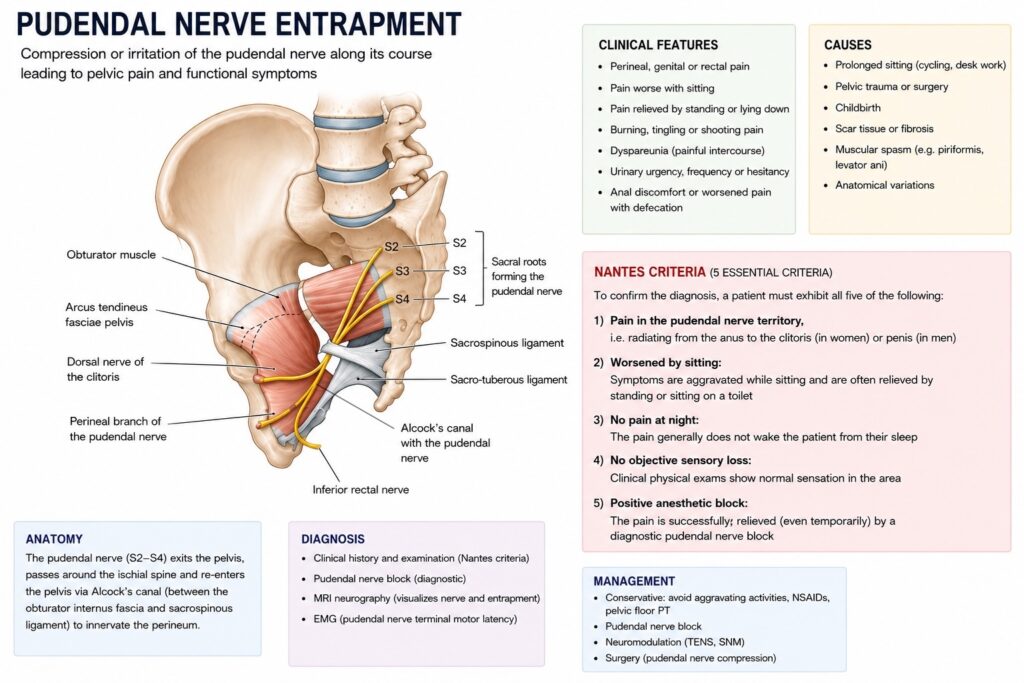
  • Prolonged or repetitive sitting (especially cycling)
  • Childbirth or pelvic surgery
  • Pelvic trauma or injury
  • Skeletal abnormalities in the pelvis
  • Scarring or thickening of tissues around the nerve
  • Age-related changes

What Are the Symptoms?

The hallmark symptom is pain in the area supplied by the pudendal nerve. Common symptoms include:

  • Burning, stabbing, or aching pain in the perineum, genitals, or rectal area
  • Pain that gets worse with sitting and tends to increase throughout the day
  • Pain that improves when standing, lying down, or sitting on a toilet seat
  • Pain that does not typically wake you from sleep
  • Numbness or tingling in the genital or perineal area
  • A feeling of a foreign object in the rectum or vagina
  • Difficulty or pain with urination or bowel movements
  • Sexual dysfunction or pain during intercourse

Symptoms can affect one or both sides and may significantly impact quality of life.

How Is It Diagnosed?

Pudendal neuralgia is primarily diagnosed based on your symptoms and a physical examination. Doctors use a set of criteria called the Nantes criteria to help confirm the diagnosis. All five of the following should be present:

  1. Pain in the area supplied by the pudendal nerve (genitals, perineum, or rectum)
  2. Pain is mainly felt while sitting
  3. The pain does not wake you at night
  4. There is no loss of sensation on examination
  5. Pain is temporarily relieved by a pudendal nerve block (a numbing injection near the nerve)

The pudendal nerve block is an important diagnostic step. A small amount of local anesthetic is injected near the nerve using image guidance (such as CT or ultrasound). If the injection temporarily relieves your pain, it strongly supports the diagnosis.

Additional tests may sometimes be used, including:

  • MRI or MR neurography — to look for other causes of pain and sometimes to visualize the nerve
  • Nerve conduction studies — to assess nerve function, though these are not always necessary

What Are the Treatment Options?

Treatment follows a stepwise approach, starting with the least invasive options and progressing if needed.

  • Avoid prolonged sitting or use a cushion with a cutout to reduce pressure on the perineum
  • Avoid activities that worsen symptoms (such as cycling)
  • Gentle stretching and activity modification
  • Nerve pain medications such as gabapentin or pregabalin
  • Tricyclic antidepressants such as amitriptyline (used at low doses for nerve pain, not for depression)
  • Standard painkillers like acetaminophen or anti-inflammatory drugs may provide limited relief
  • Opioid medications are generally not recommended for this condition
  • Pelvic floor physical therapy with a trained therapist can help relax tight pelvic muscles and reduce pain
  • TENS (transcutaneous electrical nerve stimulation) may also be helpful

Cognitive behavioral therapy (CBT) and other psychological approaches can help manage chronic pain and its impact on daily life

  • Pudendal nerve blocks using local anesthetic, sometimes combined with a steroid, can provide temporary pain relief
  • These can be repeated if effective, and also serve as a diagnostic tool
  • Botulinum toxin (Botox) injections into the pelvic floor muscles may be considered in some cases
  • A minimally invasive procedure where a special needle delivers gentle electrical energy near the nerve to reduce pain signals
  • This may provide longer-lasting relief than nerve blocks alone, though long-term results are still being studied
  • For patients who do not respond to other treatments, electrical stimulation devices (similar to a pacemaker for nerves) can be implanted to help control pain
  • This includes sacral nerve stimulation and pudendal nerve stimulation

When conservative treatments have not provided adequate relief, surgery to free the trapped nerve may be recommended. The goal of surgery is to release the nerve from the structures compressing it, allowing it to function normally again. There are several surgical approaches:

Laparoscopic (Keyhole) Pudendal Nerve Release

This is a minimally invasive approach performed through small incisions in the abdomen. Using a camera and specialized instruments, the surgeon works from inside the pelvis to identify the pudendal nerve and carefully release it by cutting the ligaments or tissues that are compressing it.

Advantages of the laparoscopic approach:

  • Small incisions and typically less postoperative pain
  • Excellent visualization of the nerve and surrounding structures with magnified camera views
  • Short hospital stay (usually 1–2 days)
  • Relatively quick operating time (approximately 30–75 minutes per side)
  • Allows the surgeon to release the nerve along its full course from the ischial spine through Alcock’s canal
  • Some techniques allow the surgeon to protect the nerve with a tissue flap to help prevent re-scarring
  • Studies have shown significant pain improvement in the majority of patients

Transgluteal Pudendal Nerve Release

This approach accesses the nerve through an incision in the buttock. The surgeon works through the gluteal muscles to reach the pudendal nerve and release it from its entrapment.

Advantages of the transgluteal approach:

  • Provides direct access to the nerve along its entire course, from the piriformis muscle down to Alcock’s canal
  • Also allows access to the cluneal nerves, which may be contributing to pain in some patients
  • The open transgluteal approach is the only technique that has been tested in a randomized controlled trial comparing it to medical treatment, showing long-term benefit
  • Can also be performed endoscopically (using a small camera through the buttock) for a less invasive version

How Do These Two Approaches Compare?

Both laparoscopic and transgluteal approaches aim to achieve the same goal: freeing the pudendal nerve from compression. A recent analysis of published studies found that the laparoscopic approach had a higher rate of significant pain relief (approximately 91%) compared to the transgluteal approach (approximately 50%), though direct comparison is difficult because the studies used different patient selection criteria and follow-up periods.

The transgluteal approach has the advantage of longer-term evidence and is the only approach supported by a randomized controlled trial. It also provides access to the cluneal nerves if they are involved. The laparoscopic approach offers the benefits of minimally invasive surgery, including smaller incisions, excellent visualization, and a shorter recovery. However, it requires advanced laparoscopic surgical skills.

Your surgeon will recommend the approach that is best suited to your specific situation, taking into account the location of nerve compression, your anatomy, and their expertise.

What to Expect After Surgery

  • Recovery varies, but most patients can go home within 1–2 days
  • Pain improvement may be gradual — it can take weeks to months for the nerve to fully recover
  • Physical therapy is often recommended after surgery to support recovery
  • Some patients experience temporary numbness or changes in sensation that usually improve over time
  • Full results may not be apparent for 6–12 months after surgery

Important Things to Know

  • Pudendal neuralgia is a real medical condition — it is not “in your head”
  • Diagnosis can take time, and many patients see multiple doctors before receiving the correct diagnosis
  • Early treatment generally leads to better outcomes
  • A team approach — involving pain specialists, physical therapists, and surgeons — often provides the best results
  • If you are not improving with initial treatments, ask your doctor about referral to a specialist experienced in pudendal nerve conditions

If you have questions about your diagnosis or treatment options, please discuss them with your healthcare team.